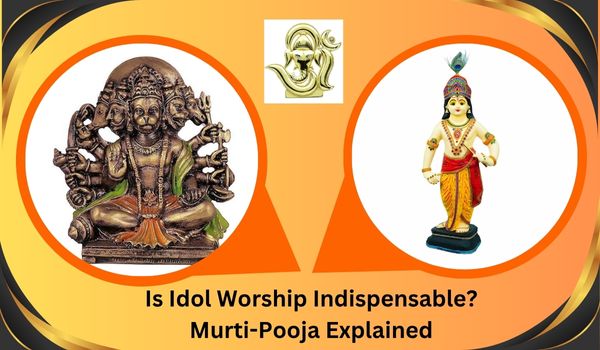
Is Idol Worship Indispensable? | Murti-Pooja Explained
Category: Spirituality Posted On: 2025-11-18 21:00:25
Discover why Murti-Pooja (idol worship) is indispensable in Sanatan Dharma. Learn how visualization of the divine exists across all religions, directly or indirectly. We will give complete information on this topic through this post of our blog. If you were looking for this topic then you are at the right place and read this article completely. Please tell us by commenting what you understood.
Is Idol Worship (Murti-Pooja) Indispensable? — A Complete Guide
Idol worship, also known as Murti-Pooja, is a central concept in Sanatan Dharma (Hinduism). For centuries, it has played a vital role in the spiritual lives of devotees. The practice is considered indispensable because it allows humans to visualize and focus on divine power, bridging the gap between the physical and the spiritual world.
While idol worship may not be openly accepted in all religions, the concept of visualizing divinity is universal. Even in faiths that avoid idols, symbols, sacred objects, and art serve the same purpose — helping humans connect with the divine.
1. Historical Background of Murti-Pooja
Murti-Pooja has its roots in ancient Vedic practices. Early texts describe the use of sacred symbols, yantras (geometric diagrams), and small statues to aid in meditation and devotion.
- Purpose: The murti is not meant to confine the divine into a physical form. Instead, it acts as a concentration tool, helping devotees focus their thoughts and prayers.
- Evolution: From simple stone carvings to elaborate temple idols, Murti-Pooja has evolved over thousands of years, adapting to cultural and artistic changes while retaining its spiritual essence.
2. The Indispensable Role of Murti-Pooja in Sanatan Dharma
2.1 Visualization Enhances Concentration
Human beings are naturally visual creatures. A tangible representation of the divine — a murti or idol — anchors the mind, allowing deep meditation and spiritual connection. Without a visual focus, thoughts can wander, making meditation and devotion less effective.
2.2 Emotional and Spiritual Stability
Murti-Pooja helps stabilize emotions. By focusing on a form, devotees cultivate peace, mindfulness, and inner calm. Regular practice enhances mental clarity and emotional resilience.
2.3 Ritual Significance
The rituals associated with Murti-Pooja — offering flowers, lighting lamps, chanting mantras — create a structured environment for devotion. These rituals strengthen the bond between the devotee and the divine, making worship a comprehensive spiritual experience.
3. How Other Religions Also Practice Divine Visualization
3.1 Sacred Symbols
Symbols act as visual reminders of divinity:
- Christianity: Cross
- Islam: Crescent and Calligraphy
- Sikhism: Khanda
- Buddhism: Dharma Chakra
Though they avoid physical idols, these symbols trigger mindfulness and devotion, similar to Murti-Pooja.
3.2 Sacred Objects
Objects often hold spiritual significance:
- Holy books placed on high altars
- Rosaries or prayer beads
- Candles, lamps, incense
These objects guide focus and spiritual practice, showing that visualization is universal, even if the form differs.
3.3 Visual Focus During Prayer
Many religions assign directions or positions during prayer:
- Facing East, Mecca, or a temple sanctum
- Sitting postures for meditation
- Using gestures or mudras
This acts as a visual and physical anchor, similar to focusing on a murti in Hinduism.
3.4 Religious Art and Calligraphy
Art serves as a medium for divine representation:
- Arabic Calligraphy of Allah (Islam)
- Christian sacred paintings and frescoes
- Buddhist stupas and mandalas
- Sikh Ik-Onkar symbols
These visual forms stimulate spiritual focus and provide a point of connection with the divine.
4. Philosophical Understanding
The philosophical foundation of Murti-Pooja lies in the mind’s need for focus and representation. Humans cannot directly perceive abstract divine energy; they need forms, images, or symbols to channel their devotion.
- Form is not the divine: The murti is a medium, not the deity itself.
- Visualization is universal: All religions employ some form of visualization to connect with spiritual power.
Thus, Murti-Pooja fulfills a psychological and spiritual function that transcends religious boundaries.
5. Psychological and Scientific Perspective
Modern psychology supports the benefits of visualization:
- Concentration: Visual objects help the brain focus, reducing mental distractions.
- Stress Reduction: Rituals and meditation around a focal object improve emotional health.
- Memory and Learning: Associating visual forms with concepts enhances retention and understanding.
Murti-Pooja, therefore, is not just a religious practice but also a tool for mental and emotional well-being.
6. Examples of Murti-Pooja in Daily Life
- Household Altars: Simple statues or images guide daily prayers.
- Temple Worship: Complex rituals and idol processions help the community engage spiritually.
- Festivals: Idols like Durga, Ganesha, and Krishna during festivals strengthen cultural and spiritual identity.
These practices integrate spirituality into daily life, showing the indispensable nature of Murti-Pooja.
7. Indirect Forms in Other Religions
| Religion | Example | Form of Visualization |
|---|---|---|
| Islam | Arabic Calligraphy | Divine name in visual form |
| Christianity | Church Art & Cross | Spiritual symbols for meditation |
| Sikhism | Ik-Onkar symbol | Represents oneness of God |
| Buddhism | Stupas, Mandalas | Visual focus for meditation |
8. Conclusion
Murti-Pooja is an indispensable spiritual practice in Sanatan Dharma. It allows humans to visualize divine power, focus the mind, and cultivate emotional stability.
Even religions that avoid idol worship employ symbols, objects, art, and rituals to achieve the same objective — spiritual focus and divine connection.
In essence, visualization of the divine is a universal practice, with Murti-Pooja being a culturally and spiritually refined form that has stood the test of time.